TechShortsApp — V2.4.0: Interface System Update
This update redesigns the platform around its existing evidence model, creating a calmer, more coherent, and responsive credibility-first experience.

Helpful and Follow expanded the evidence model, but the interface remained fragmented
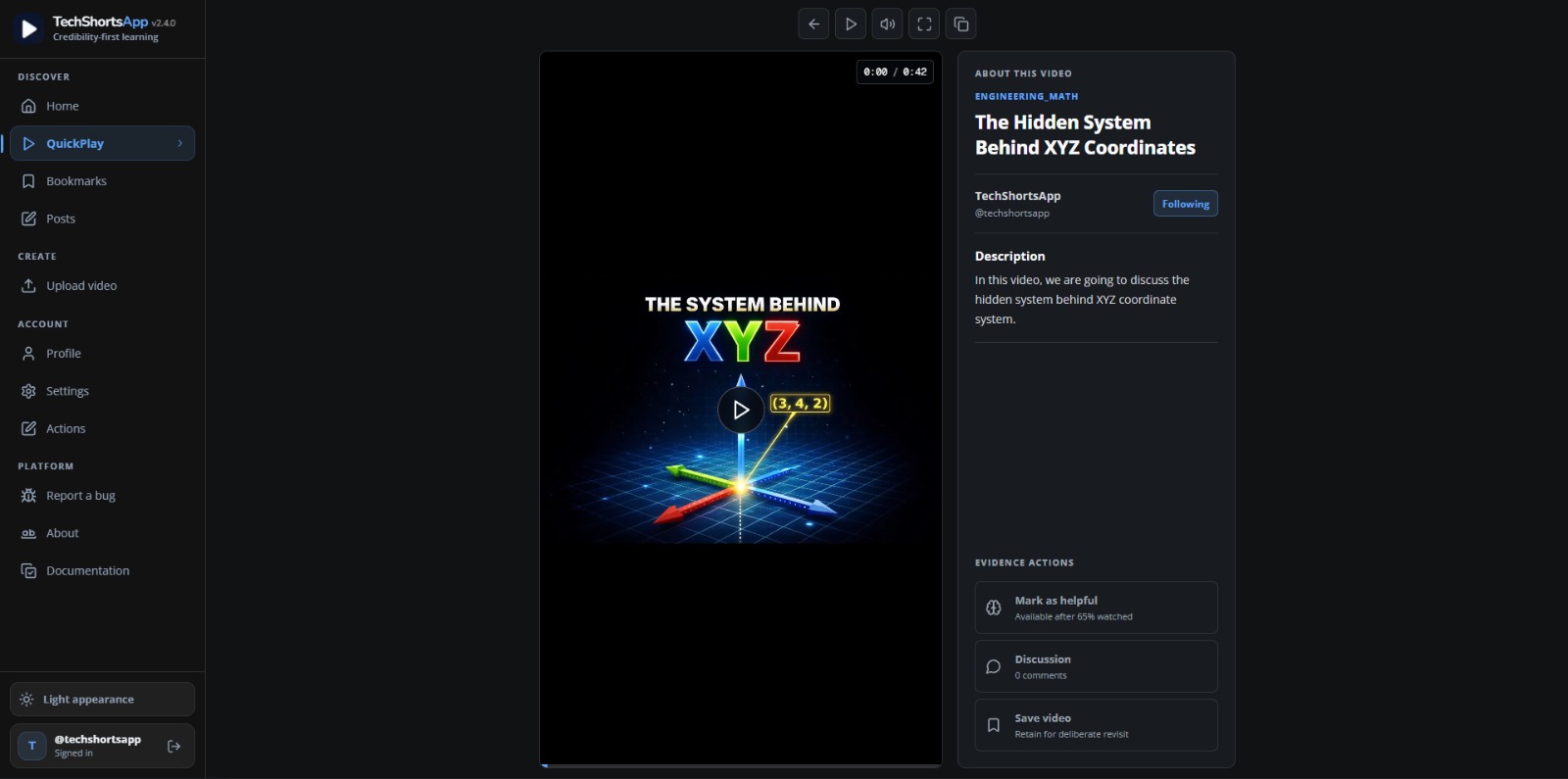
Unified credibility-first interface across discovery, QuickPlay, profiles, and account workflows
What Changed
V2.4.0 does not introduce a new ranking signal. Instead, it redesigns the environment in which the existing evidence model is presented and used.
V2.3.0 added Helpful and Follow, expanding the platform beyond watch ratio, replay, and bookmarks.
V2.4.0 focuses on the experience surrounding those signals: how users discover videos, interpret confidence, understand context, interact with creators, and manage their accounts.
The goal was not simply to make the platform look different. The goal was to make the interface feel consistent with the system's underlying epistemic position.
TechShortsApp does not claim to observe truth directly. It estimates confidence from behavioral evidence that remains uncertain and context-dependent.
The ranking model and its existing signals remain intact. This release changes how the platform communicates and supports that model across its major workflows.
Credibility Interface Redesign
The primary learning and viewing surfaces were redesigned to make evidence, confidence, and uncertainty easier to interpret without turning them into decorative scores.
- ✅ Evidence-oriented home feed
- ✅ Full-height QuickPlay viewer
- ✅ Persistent video context on large screens
- ✅ Clear Helpful, Discuss, and Save controls
- ✅ Creator profile and viewing-history redesign
- ✅ Consistent loading, empty, and error states
Responsive Platform System
Navigation, account workflows, platform pages, and shared system states now use one consistent design language across screen sizes and appearance modes.
- ✅ Desktop sidebar and mobile navigation
- ✅ Responsive desktop, tablet, and mobile layouts
- ✅ Light and dark appearance support
- ✅ Authentication and password-recovery redesign
- ✅ Settings and profile-management redesign
- ✅ Analytics, About, and bug-reporting consistency
System Areas Updated
The redesign applies one visual and interaction language across the platform while preserving the existing evidence and ranking logic.
Why It Matters
A credibility-first platform can undermine its own purpose if confidence, uncertainty, and evidence are presented inconsistently.
The interface surrounding a behavioral signal also matters. Button placement, labels, device layout, visibility, and interaction friction can influence whether a user acts and what that action appears to mean.
A clearer interface may reduce accidental behavior and make deliberate actions such as Helpful, Follow, Bookmark, and Discussion easier to interpret.
At the same time, a redesign can introduce new behavioral effects. V2.4.0 therefore treats interface design as part of the evidence environment, not as a neutral visual layer.
Next Research Questions
A more coherent interface improves usability, but it also creates new questions about how design affects behavioral evidence.
The next challenge is understanding whether the same signal retains the same meaning across contexts, devices, and interface states.
Open Questions
- Does clearer confidence context change how users select videos?
- Does the redesigned interface change how often Helpful is used?
- Do the same actions carry the same meaning on mobile and desktop?
- Can better context reduce accidental or ambiguous behavioral signals?
Interface Hypothesis
A clearer interface may improve the quality of the behavioral traces collected by the system.
However, interfaces also shape behavior. A more visible action may produce more interactions without necessarily producing better evidence.
V2.4.0 therefore treats interface consistency as an important condition for interpreting future user behavior.
Release Summary
TechShortsApp V2.4.0 moves the platform from fragmented prototype screens toward a unified credibility-first product experience. The ranking model and existing interaction signals remain intact; this release improves how evidence, uncertainty, and platform workflows are presented across devices. We do not rank truth. We rank confidence based on the evidence currently available.